
Removing Accumulated Solids Before Field Clogging Occurs
Residential Septic Pumping in Owenton for Preventing Drain Field Overload and System Backup
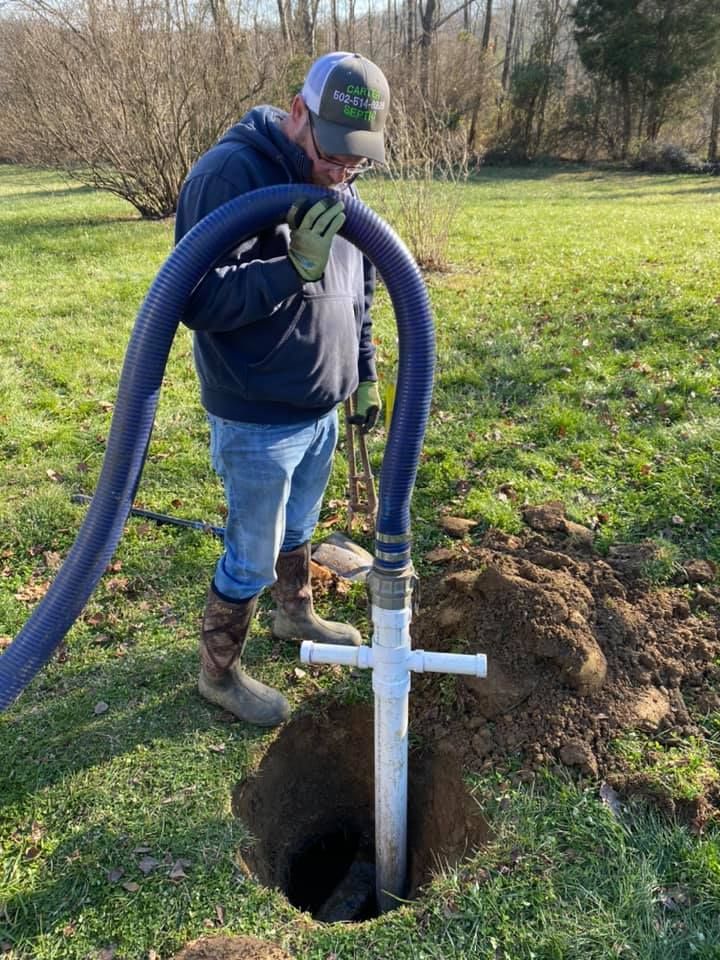
Solids settle at the bottom of the septic tank as sludge while fats, oils, and grease form a top scum layer, and regular pumping removes these accumulated materials so only clarified liquid enters the drain field. A vacuum truck connects to the main tank opening, and the technician uses a high-powered pump with stirring tools called muck churns to break up solidified sludge and grease layers, completely emptying both compartments of the tank while checking for flow back from the outlet. Carter Septic, LLC performs residential pumping for homes in Owenton, Frankfort, Versailles, and Georgetown, preventing solid waste from overflowing into the absorption field where it would clog pipe perforations and soil.
Pumping frequency depends on tank size and household occupancy—a three-bedroom home with a thousand-gallon tank typically requires pumping every three to five years, while larger families or smaller tanks need more frequent service. The technician opens all access lids to reach both the inlet and outlet sides of the tank, ensuring complete removal of settled sludge and floating scum that accumulate in separate compartments.
Set up a pumping appointment based on your household size and last service date to maintain proper system function.
What Changes After the Tank Is Emptied
Pumping removes years of accumulated organic waste, toilet paper, and grease that have compacted at the tank bottom and formed thick surface layers. The process restores full tank volume, allowing adequate retention time for new wastewater to separate into solid, liquid, and scum layers before effluent exits to the drain field. Muck churns agitate hardened sludge to suspend it in liquid so the vacuum hose can extract it completely, preventing residual buildup that would reduce effective capacity.
After pumping, the tank functions with maximum separation efficiency—solids settle fully before liquid flows through the outlet baffle into distribution pipes. Toilets and drains operate normally without slow drainage or gurgling sounds caused by restricted flow through a sludge-clogged tank. The drain field receives only clarified effluent free of solids that would otherwise block gravel pores and pipe perforations, causing field saturation and surface ponding.
During pumping, technicians inspect baffles and tank walls for damage, noting any cracks or deterioration that could lead to future leaks or component failures. Properties in Owenton and Frankfort with older concrete tanks benefit from this visual check, as baffle corrosion from hydrogen sulfide gas is common after fifteen to twenty years of service and requires repair before outlet flow becomes compromised.
What Homeowners Ask About Pumping Service
Pumping is the most frequent septic maintenance task, and understanding timing, process, and tank condition helps property owners prevent costly emergency repairs.
How do you know when the tank needs pumping?
Sludge and scum layers should be pumped before they occupy more than one-third of the tank's total volume, typically every three to five years for average households, or sooner if slow drains or odors appear near the tank or drain field.
What happens if pumping is delayed too long?
Excessive sludge accumulation reduces effective tank volume, allowing solids to flow into the drain field where they clog distribution pipe perforations and soil pores, causing field failure that requires excavation and replacement of gravel trenches and piping.
Why is complete tank emptying necessary rather than partial pumping?
Partial pumping leaves compacted sludge layers at the bottom that harden over time, reducing tank capacity and making future pumping less effective, while complete emptying resets the system to full functional volume and allows thorough baffle inspection.
When should pumping be scheduled relative to seasonal weather in Versailles?
Winter pumping is possible but more challenging when frozen ground complicates tank access, so scheduling during dry months when the lawn and access routes are firm simplifies truck positioning and reduces property disturbance.
How is waste disposed of after removal from the tank?
Pumped septage is transported to municipal wastewater treatment facilities or approved septage disposal sites where it undergoes further treatment to meet environmental discharge standards before final processing.
Carter Septic, LLC provides residential pumping service throughout Owenton, Frankfort, Versailles, and Georgetown, maintaining systems on schedules that prevent drain field damage and extend overall system life. Call to schedule pumping based on your household size and tank capacity, and receive a condition report during service.